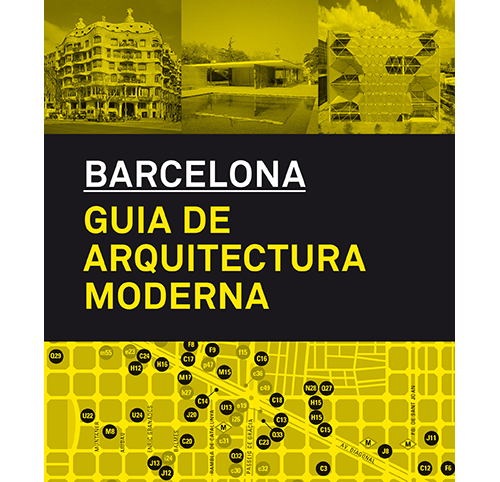

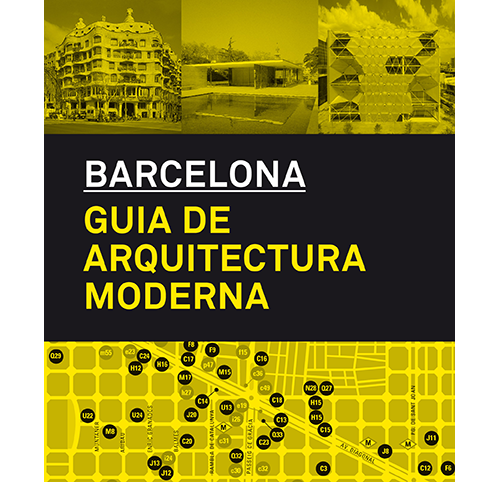

Barcelona Guia de Arquitectura Moderna (SP ED.)
Manuel Gausa, Marta Cervelló, Maurici Pla, Ricardo Devesa
This guide brings together the most important and interesting examples of modern and contemporary architecture in Barcelona. It covers the emergence of Modernisme and Noucentisme, creative periods for which Barcelona is known the world over: the emblematic German Pavilion by Mies van der Rohe (1929), rationalist works conceived from the 40s and 50s, large housing projects of the 70s, the Olympic architecture of the late 80s, post-Olympic architecture, examples of the ongoing urban redefinition from the 90s, and the iconic architecture of the 21st century. Each entry has a brief description that includes planning and completion dates, a summary explanatory description, and subsequent restoration and alterations with a graphic coding system. This updated edition features the most recent architectural production (up until 2012), including landmarks such as Jean Nouvel's Agbar tower, the 2004 Forum building by Herzog & de Meuron, the Media-ICT building
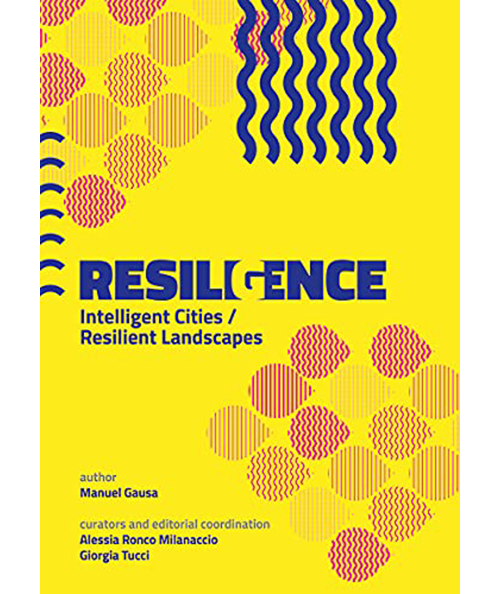
Resili(g)ence (vol. 1)
Intelligent Cities. Resilient Landscapes
Manuel Gausa
The term Resili(g)ence is presented in these pages as a neologism coined by the team responsible of the GIC.Lab (DAD-UNIGE) to define those strategies of approach to our cities and environments of life, exchange and relationship, capable of combining Urban Resilience and Urban Intelligence, simultaneously.
As will be seen later in some of the texts that make up this publication, both voices are called, intersected, combined and intertwined, in many of their meanings and possible connotations.
The structure of this publication includes 4 different sections that articulate the different contributions and approaches that are conjugated here.
– A first section (Foreword and Framework) introduces, in fact, the context and the framework of reflection and the different connotations associated with it.
– A second section (Crossing Scenarios) articulates various contributions generated around the GIC.Lab of Genova and the ADD (Doctorate in Architecture and Design) of the DAD (Department Architecture and Design
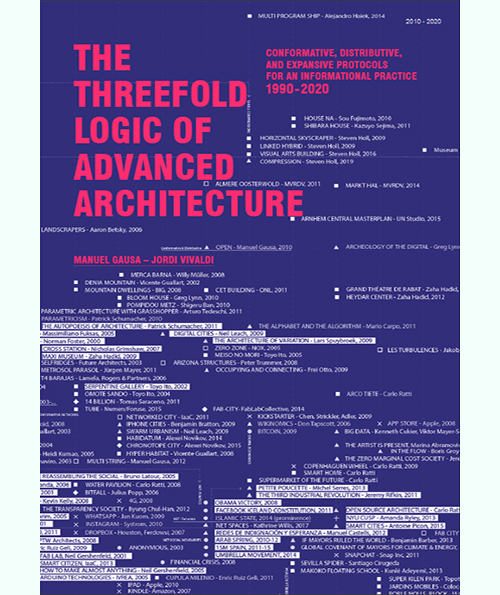

The Threefold Logic of Advanced Architecture
Conformative, Distributive and Expansive Protocols for an Informational Practice: 1990-2020
Manuel Gausa, Jordi Vivaldi
This work proposes a threefold cultural narrative whose interactive and informational logic differs from that of modernity and postmodernity. It positions three different ethos by critically approaching the architectural side of a cultural mutation that has been affecting the Western experimental areas of knowledge and practice since the end of the last century. A transformative process constituted by a constellation of transdisciplinary manifestations, accelerations, turns, shortcuts and clusterizations that by no means can be read under one single epistemological umbrella. In this sense, rather than approaching the practice of architecture focusing on its disciplinary inner specificity, this book approaches the research of experimental architecture focusing on its extra-disciplinary entanglements. It argues that a vast multiplicity of fields of knowledge participates in a cultural endeavour modulated through three protocols -forms of action- that singularize three decades: Conformative Protocols (1990-2000),
35,00€
Buy Ebook