


skip to Main Content
Concerning…Land

Concerning…Land

Ingrid Schroder, Emily Priest
This publication asks contributors a direct and open question: what are you concerned with right now? Its aim is to place current topics and debate at the centre of architectural education. By publishing contrasting views revolving around a singular question, architects, practitioners, educators, students and theorists can share their ideas on how urgent issues can be examined and rethought within education, practice and writing.
With Contributions Of Charlotte Birell, Georgia Hablützel, Tadeáš Ríha, Silvana Taher
The ReView: What Is Affordable?

The ReView: What is affordable?

Andrea Bardon de Tena The Review: "What is Affordable?" presents the work of Tulane School of Architecture over the past years in response to contemporary concerns and challenges. The outcome of TUSA's various programs - Architecture, Design, Historic Preservation, and Real Estate - is organized into four major chapters according to different action plans for addressing affordability: environmental, cultural, economic, and social. Posing the question “What is economically, socially, environmentally and culturally affordable?”, raises many other questions: What is desirable? What is fair? What is logical and exciting? What is appropriate? The work of the students, faculty, and researchers at TUSA demonstrates the commitment of the school to developin g sustainable alternatives for our future built environment. With Contributions of Iñaki Alday, Casius Pealer, Edson Cabalfin, Carol Reese, Sonsoles Vela
Climate Inheritance

Climate Inheritance

Rania Ghosn & El Hadi Jazairy / DESIGN EARTH

Climate Inheritance is a speculative design research publication that reckons with the complexity of world and heritage in the Anthropocene. The impacts of climate change on heritage sites—from Venice flooding to extinction in the Galápagos Islands—have garnered empathetic media attention in a landscape that has otherwise failed to communicate the urgency of the climate crisis. In a strategic subversion of the media aura of heritage, DESIGN EARTH casts ten World Heritage sites as narrative figures to visualize pervasive climate risks—rising sea levels, extinction, droughts, air pollution, melting glaciers, material vulnerability, unchecked tourism, and the massive displacement of communities and cultural artifacts—all while situating the present emergency within the wreckages of other ends of world, replete with the salvages of extractivism, racism, and settler colonialism. The possibilities of such climate inheritances are narrated in drawing triptychs and mythologies that bequeath other worlds and values. With Contributions of  Lucia Allais, David Gissen, Rodney Harrison and Colin Sterling
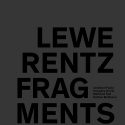
Lewerentz Fragments

Lewerentz Fragments

Jonathan Foote, Hansjörg Göritz, Matthew Hall, Nathan Matteson
Through new essays, recently discovered archival material, photography, and drawings, the publication Lewerentz Fragments explores the architect’s body of work spanning three-quarters of the twentieth century. Comprising writings from all the major scholars on Lewerentz’ work, along with several new voices, this publication offers new insight into the context surrounding this architect’s work. Rather than focusing on a single thesis, the book offers a diversity of insight from multiple cultural and professional perspectives. In addition, previously unpublished translations of interviews and dialogs among the architect and his contemporaries offer a voice to the ‘silent architect’ altering the traditional interpretations of the work and digging past the surface of what might be considered his philosophy of building. Rather than serving as an introduction to the architect’s work, this volume provides detailed fragments as a deep and diverse dive into one of the most mysterious of Scandinavia’s modern masters.
With Contributions of Janne Ahlin, Claes Caldenby, Adam Caruso, Johan Celsing, Patrick Doan, Nicola Flora, Jonathan Foote, Matthew Hall, Per Iwansson, Thomas Bo Jensen, Nathan Matteson, Enrico Miglietta, Paolo Giardiello, Hansjörg Göritz, Magnus Gustafsson, Mariana Manner, Anne-Marie Nelson, Gennaro Postiglione, Wilfried Wang, Ola Wedebrunn. Archival reproductions from the Swedish Centre for Architecture and Design (ArkDes), The Stockholm stadsarkiv, and The Malmö stadsarkiv. EBOOK EDITION
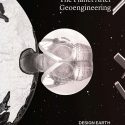
The Planet After Geoengineering

The Planet After Geoengineering

DESIGN EARTH ( Rania Ghosn & El Hadi Jazairy ) The term "geoengineering" refers to technologies that counteract the effects of anthropogenic climate change by deliberately intervening in Earth systems. In the midst of a climate crisis, and with disparate views on whether planetary-scale design is the appropriate response at all, The Planet After Geoengineering employs a speculative fiction approach to think with and against geoengineering as a form of planetary management. The graphic novel makes climate engineering and its controversies visible in a series of five stories that are collectively assembled into a planetary section from the deep underground to outer space. Each geostory —Petrified Carbon, Arctic Albedo, Sky River, Sulfur Storm, and Dust Cloud— depicts possible future Earths that we come to inhabit on the heels of a geoengineering intervention all while situating such promisory visions within a genealogy of climate-control projects from nineteenth-century rainmaking machines and volcanic eruptions to Cold War military plans. Such fabrications of an engineerable earth open a space to forge a new geo-politics that includes the actual Earth —its dimensions, processes, and lifeforms— as constitutive of design and the planet. With Contributions of Benjamin Bratton, Holly Jean Buck, Kathryn Yusoff
Traversées (FR ED.)

Traversées (FR ED.)

Dominique Coulon & Associés Dominique Coulon

The writing of Dominique Coulon & Associés, nominated twice for the Mies van der Rohe award, reflects the agency's work in connection with different contextual postures and the construction of complex spatial relationships. In circumstances that are often difficult, buildings add value to their locations, transforming them. This book explores the public dimension of architecture taking a new look at the eclectic work of Dominique Coulon; his production of public buildings illustrates the complexity of his architectural approach. Dominique Coulon plays with context, light, and materiality to produce public places that are detailed and welcoming. The areas he proposes affect and accompany the body. His architecture is part of a dynamic relationship, mobilising the senses to propose a specific universe, which may be cheerful, or dramatic. These spaces serve the public dimension of his architecture.

Winners of Architizer 2021 A Firm Awards - The World's Best Architecture Firms Visit urbanNext for exclusive on-line content about this book Buy English Edition
New Geographies 10: Fallow

New Geographies 10: Fallow

Michael Chieffalo & Julia Smachylo The term fallow is borrowed from agriculture as a metaphor to critically examine the role of strategic dormancy in cycles of valorization and devalorization of the built and unbuilt environment. Rather than a strict binary of fecund or barren, however, New Geographies #10 conceives of fallowness as a rich and complex terrain to provoke a critical examination of the sites, strategies, scales, and imaginaries of the unused, the devalued, and the dormant, and explore modes of revalorization in all its forms: economic, ecological, social, cultural. Ultimately, it is hoped that this compilation will provide a foundation on which designers can build new lines of questioning regarding processes of urbanization that will illuminate new speculative horizons for the design disciplines, while also demarcating points for cross-disciplinary study of the built and unbuilt environments.
Casas SANAA (SP ED.)

Casas SANAA (SP ED.)

Sam Chermayeff, Agustín Perez Rubio Sanaa’s housing projects, both finished (House A, S House, House in a Plum Grove, Small House and Moriyama House), and unfinished projects (Flower House, Garden & House, Seijo Apartments, Ichikawa Apartments, House in China and Eda Apartments). SANAA's architecture embraces complexities within deceptively simple appearances. It has many elements that are impossible to understand unless actually “experienced”. In contrast with modern architecture, SANAA has many aspects that cannot be revealed in “representative” media such as plans, models, and photographs. The “representations” of their architectural works incorporate ambiguity and chronological elements. This characteristic makes Sanaa one of the most innovative offices in the current architectural panorama. EBOOK VERSION  

Privacy Policy

Privacy Policy Confidentiality and safety are fundamental values for Actar Publishers, because of that we have the compromise to guarantee the privacy of the User at all time and not…

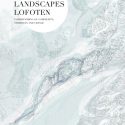
Layered Landscapes Lofoten

Layered Landscapes Lofoten

Understanding of Complexity, Otherness and Change Magdalena HaggärdeGisle Løkken / 70°N arkitektur This book discusses approaches towards landscapes under pressure and transformation, and the importance of unprejudiced and experimental investigations to reveal its natural and cultural complexity. Layered Landscapes Lofoten, Understanding of Complexity, Otherness and Change aims to challenge internalized concepts about how landscapes are considered and investigated, to open for alternative research, and legitimize subjective, singular and experimental approaches as valid and appreciated as a foundation for an informed process. These approaches take into consideration both the landscape and the practices taking place in the landscape, that are consistently full of individual and collective stories and experiences —the complexity created in both time and space, which influences our societies not only as traces of historical events, but as present realities and even expectations and what is to become. Under the concepts of complexity, imbrication, vulnerability, fieldwork, flexibility and reorientation ideas are developed, all based in the contemporary and historic layers of the dramatic and contested landscapes of the Lofoten Islands in Northern Norway —where pressure from political decisions and structural changes, increasing tourism, a potential new oil industry and uncontrollable global forces' impact on nature and societies and cause continuous transformation and alteration of landscapes and topography, surrounding the traditional and modern fishing communities. DAM Deutsches Architekturmuseum International Architecture Book Award 2019
Layered Landscapes Lofoten. Understanding Complexity, Otherness and Change aims to address urgent issues about living together in landscapes and territories under severe pressure, to encounter people and landscapes with openness and to gain knowledge about complex realities that set the conditions for all existence. In the light of an ongoing crisis we can learn to be less biased and superficial in our approaches, but aim for a more resilient society, and for flexibility in the confrontation with unknown challenges. _Magdalena Haggärde (23/04/2020)
Visit urbanNext for exclusive on-line content about this book EBOOK EDITION
0
Your Cart is empty
Back To Top