

Bracket 2: Goes Soft
Neeraj Bhatia, Lola Sheppard
This publication critically positions and defines soft systems through 27 projects and 12 articles.
An in-depth study of soft systems in design Bracket 2 examines physical and virtual soft systems, as they pertain to infrastructure, ecologies, landscapes, environments, and networks. In an era of declared crises—economic, ecological and climatic, amongst others—the notion of soft systems has gained increasing traction as a counterpoint to permanent, static and hard systems.
EBOOK VERSION
18,00€
Buy Ebook 
Bracket 3: At Extremes
Lola Sheppard & Maya Przybylski
This publication includes critical articles and unpublished design projects that investigate architecture, infrastructure and technology as they operate in conditions of imbalance, negotiate tipping points and test limit states.
We are conditioned, as designers of the built environment, towards the organization of people, programs and movement. Indeed the history of modern urbanism, architecture and building science has been predicated on an anti-entropic notion of programmatic and social order. But are there scenarios in which a state of extremity or imbalance is productive? Bracket [at extremes] seeks to understand what new spatial orders emerge in this liminal space. How might it be leveraged as an opportunity for invention? What are the limits of wilderness and control, of the natural and artificial, the real and the virtual? What new landscapes, networks, and urban models might emerge in the wake of destabilized economic, social and environmental conditions?
EBOOK VERSION
34,00€
Buy Ebook 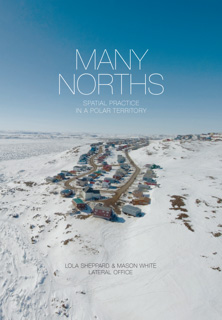

Many Norths
Spatial Practice in a Polar Territory
Lola Sheppard & Mason White / Lateral Office
Many Norths: Spatial Practice in a Polar Territory charts the unique spatial realities of Canada’s Arctic region, an immense territory populated with small, dispersed communities. The region has undergone dramatic transformations in the name of sovereignty, aboriginal affairs management, resources, and trade, among others. For most of the Arctic’s modern history, architecture, infrastructure, and settlements have been the tools of colonialism. Today, tradition and modernity are intertwined.
Northerners have demonstrated remarkable adaptation and resilience as powerful climatic, social, and economic pressures collide. This unprecedented book documents—through the themes of urbanism, architecture, mobility, monitoring, and resources—the multiplicity of norths that appear and the spatial practices employed to negotiate it. Using innovative drawings, maps, timelines, as well as essays and interviews, Many Norths reveals a distinct northern vernacular.
EBOOK EDITION
38,00€
Buy Ebook 
